Week 3

Still going steady.

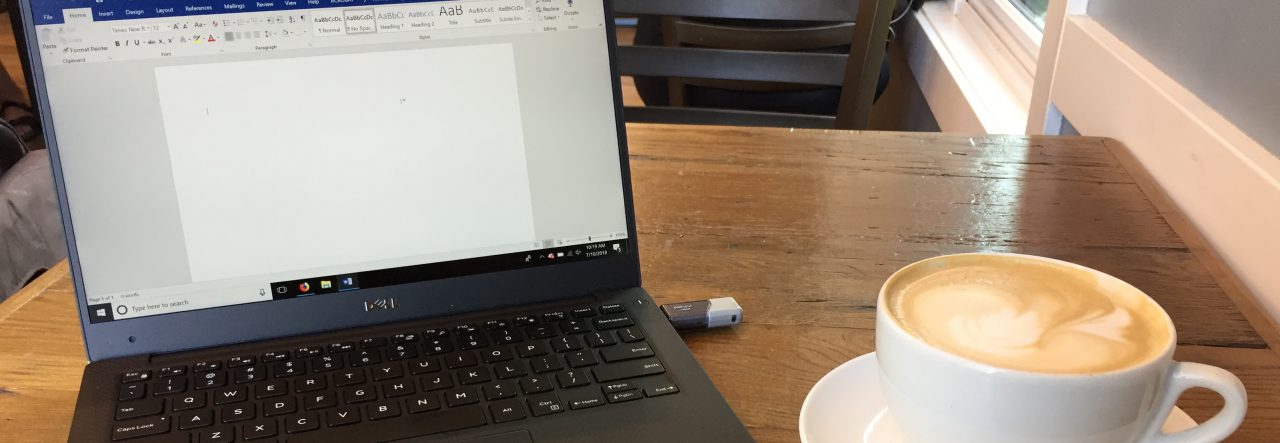
Other times I’ve done this, I’ve written in fits and spurts. Three thousand words here, a thousand words there … This time I seem to be trucking along with about two thousand words a day and half that pace on the weekends. That’s pretty good. I’ve got nine days left and twenty-thousand words to go. It’ll happen.

My THINGS TO FIX list is growing especially long. It’s like a friend wearing a Halloween mask. It only looks scary, but ultimately it’s going to make the book better in the end. It’s also going to be a heck of a lot of work. But that’s a still a problem for Future Dan, though the rate I’m going Future Dan is going to be Present Dan pretty soon.

There’s a whole bunch of worldbuilding that needs clarification, but one of the big issues I know I need to fix is my naming conventions. I’ve had this idea for a while now and this manuscript is the first time I’ve got a chance to test it out.

It goes something like this …

Places tend to be permanent so they get very descriptive, albeit dull names. Those mountains are gray, well then they’re the Gray Mountains. Or your city is close to the shore, then you live in Nearshore. They’re supposed to be self-descriptive.

Now people, that’s where it gets interesting. People change. Places don’t. In this world, people are given a name at birth and then earn or are assigned names later by authority figures. These names are usually descriptive of the person’s deed or actions at a certain point in time. So someone might be born with the name Round Like Acorn, then later be named First of Snowfall, and even later earn the name Cheats At Cards. That’s three different names for one person and totally confusing. Especially when you have dozens of characters running around.

So I tried adding some consistency, by making the noun static. That would make my example:

Round Like Acorn

Round Of Snowfall

Round Cheats At Cards

So, even if you don’t remember everything, at least “Round” stays the same and that becomes the character’s name and nickname for the reader. But I’ve already broken my own rule because in “Round like Acorn,” the noun subject is actually the implied “You”. I mean it works, kind of, but it sometimes feels like putting a circle in a square shaped hole when you’re writing something like, “Round kicked off the wall and flipped into the water.” It’s awkward.

If that wasn’t enough, there are noble families in the story who play an important role in the narrative and the world. I also wanted to incorporate them into a person’s name so that as a reader if you’ve never met a character before, one look at his or her name and you’d know what family they belonged to.

It’s funny. Writing it all out like this feels like I’m giving away a secret recipe or something. I’m all right with it though. Last night, I think I finally cracked it. It’ll probably still be confusing, but I’ve simplified some of it and with enough explanations on my part to remind the reader, I hope it actually pulls people into the world instead of kicking them out.

We’ll see, though. Getting it into the hands of some beta readers will be the ultimate test. Gotta hurry up and finish it first before that even happens.

Week 2

The second week of MyNaNoWriMo continues to go well. I’ve slowed down a little thanks to some work commitments, but there’s still time to catch back up. I don’t know if I’d be as optimistic if it wasn’t for WriteTrack. The program continues to impress. I love watching my daily word count goals change based on my current writing habits.

My latest work in progress is in the home stretch now. I just entered the start of the Resolution phase a couple thousand words ago. Meaning, that we’re on our way to the climax, actual resolution, and denouement.

I’m an outliner. I need structure and story beats to know where I’m going. I can trim and edit later, but if I don’t have these sections laid out then I find that my stories just fall apart. So finally getting past Plot Point 2 was a huge deal for me. It was the signal to shift it into the next gear. Plus, the switch came after what ended up being a twenty-one thousand word battle scene. So there’s that. I don’t think of myself as much of an action writer, but this a fantasy leading towards the epic fantasy. If there aren’t battles and combat every once and a while, then it’d be a pretty boring book.

When I’m not writing, I’ve been doing some editing of older manuscripts getting them ready for self-publishing. I’m always astounded when I come back to something that I thought was as good as it was ever going to be and then find a way to make it better. Usually that involves substantial cutting and editing.

Case in point, my latest manuscript – Altered Egos – is still making the querying rounds. It’s a science fiction story clocking in a 105k words. I’d done seven drafts up until that point and thought it finished. Then I had an epiphany late one night as I fought the baby back to sleep. I not only knew how to trim some of the fat, but I realized how I could combine two similar scenes into just one and cut down on the redundancy too. The end result trimmed 11k off the final product and its sitting pretty at 94k now. Further proof that works are never finished, just abandoned as the saying goes.

When it comes to writing, I’m not really all that much of a perfectionist. I want to be happy with the final product, but I don’t agonize over the little things. You’re talking to a guy who used to turn in rough drafts in college because he couldn’t be bothered to go back and read a paper even once. So it’s not like I enjoy doing draft after draft after draft. I go until I feel like the work is finished and then it’s time to move on. Don’t get me wrong, I want to be proud of the result, but I don’t often get  hungup.

Lately I’m learning that as I level up as a writer, that some of my earlier works can still use another pass or two proving that they weren’t actually ready for publication in the first place. That’s okay. Now that I’ve decided to release them, I can clean them up one last time so they’re even better.

The thought of publishing my own work used to make me nervous. I kept thinking that what if I wanted to return to this world or idea someday. If I publish it, then I can never make the 2.0 version to sell to a traditional publisher. But then I realized that I haven’t run out of ideas yet. I’m working on finishing my seventh manuscript and they’re all wildly different from each other. I’ve got ideas for book eight primed on the back burner right now and that’s assuming I don’t end up writing a sequel to one of these soon-to-be self-published works instead. So running out of ideas just isn’t going to happen.

Okay, enough of that. Time to get back to writing.

Week 1

Full disclosure, I didn’t give myself that six day handicap after all. I’m a realist. I have three little kids at home so I’m not always going to get time to write on the weekends. So, my personal time frame officially began on Jan 7. And it runs through Feb 6.

Week one of my National Novel Writing Month or – MyNaNoWriMo – is going well. I felt clever writing that, but I’m sure I’m not the first person to use that abbreviation. Also, it’s kind of a pain typing so many alternating capital and lowercase letters. Anyway …

I’ve always like the festive camaraderie surrounding the event, but I think the thing I like most is the data graphs. I mean, I’m going to write anyway, but there’s just something so satisfying about watching that little bar move. Even more so, I love the constant tug of war with myself as I watch my target daily word count fluctuate. Am I going to make it in time? Who knows?! I’m on a wild ride only I care about. And by wild, I mean like put a quarter and ride a pony in the mall kind of wild.

I was prepared to go at it on my own and put all that info into an Excel spreadsheet. That was until I found WriteTrack. Its everything I wanted!

You create your personal goal and set the parameters. I chose fifty thousand words in thirty days, but you can do anything. People struggling in the beginning of the craft can put ten thousand in a month. Whatever. The neat part is not only does it calculate your daily word count so you hit that mark – and update it depending on your progress – but you can assign a weighted value to each day as well. The output looks like a calendar and if I know I need to hit, say, five thousand words today or whatever, I can change the typical value of 100 and crank that sucker up to 1000. It doesn’t actually do anything, but it reminds me to keep on trucking.

In the time I’m not writing, I’m editing some of my other manuscripts. If I’m going to self-publish them after all, they need one final-FINAL read through. I’ve also been fiddling with Altered Egos some more which is still making the querying rounds. I thought it was tight as can be, clocking in at 102 thousand words, but I’ve been able to trim it down to 94K. It’s considerably increased pacing and I found a way to combine two very similar, and now I realize, redundant scenes, into one. I had to kill some darlings, but I’m pretty proud with the outcome so far.

Okay, enough of that, I need to get back to it. Today’s only weighted at 100, but I lost time over the weekend. Gotta get back to it!

Draft 2

This might be a strictly me thing, but there is no aspect I fear so much in all of writing – not even the blank page of a new book – then the beginning of revisions.

Once I finish any manuscript and get to the satisfactory “The End”, I let out an enormous sigh of accomplishment and relief. I did it. The marathon is over. I let myself rest on my laurels for a bit, give myself plenty of pats on the backs, couple more sighs, and allow myself the victory because I know the real work is only just getting started.

As I’m writing, I keep a running list of items that need to be updated, fixed, or changed for the next draft. I so cleverly call this my “THINGS TO FIX” list. It’s in caps so you know it’s important. This list is my new outline of what needs my immediate attention in the early revision stages. Thing is, I can’t even get to that list until I complete what I call Draft 2.

Now all writers have a second draft. Nobody gets it right the first time around. But I’m talking about Draft 2. Capital D. Plenty of writers can just dive back into the guts of his or her story and incorporate the changes outlined in their own THINGS TO FIX list, but not me. I need to go through the whole thing one time, tightening it up along the way, to give the whole book shape in my head. Only then can I go back and put the big changes into Draft 3.

Draft 2 is where all brackets get filled in, word choice is cleaned up, prose isn’t scrubbed so much as shaped. It’s what turns this giant pile of words into a story and it is exhausting. That’s where I confront my failures head on and try and turn them into something worth reading. Let me tell you, it’s a slog. It’s slow going doing all of that fine tuning, but for me it is completely necessary. I need to make the machine before I can go about fixing it.

I always go through the same stages too. The beginning of the manuscript is often the roughest which makes sense since it was the first part of the story written down. I was still finding character and voice and yet to hit my grove. So, naturally, I think my writing is garbage. Cleaning up all the clunky prose doesn’t help my self-esteem. Somewhere in the process, it gets better. Usually, this is when the story is starting to kick into gear. By the end, I’ve settled with the idea that it’s not all that bad. Not great. Maybe not even good. But not as scum-bucket terrible as I thought it was.

But now I have a story and that’s something I can fix. The next pass puts in the big elements. The pass after that cleans it up yet again. Each time I go through the manuscript, I polish it further and further until at some point I’m legitimately happy with it in its entirety. It transforms from a complete mess to something worth reading.

I’m not even close to that stage yet with my current manuscript. I’m maybe three fifths into it. A little slower than expected. I had other projects vying for my attention. But already, judging by what I’m generating day to day and looking at my THINGS TO FIX list, I know this one is going to be a doozy.

At some point I’m going to come out of the fog, blinking like I haven’t see the light of day in years, and be astonished there’s something good – or at least to me it is – in front of me. It takes a while to get there though, and often involves a lot of self-degradation. So celebrate those victories when you have them. But keep going. The light at the end of the tunnel is a finished book to be proud of.

I just have to get through Draft 2 first.

A Balanced Diet

You can consume or create, but you can’t do both.

I think Kevin Smith is fond of saying that. I’m sure I could look it up, but it doesn’t make the statement any less true.

I’ve found that I get in rhythms where the work comes easy – well, easy enough sometimes, but it’s still work – and then I fall off the wagon where it’s pulling teeth every time. And for me, that’s usually due to outside distractions.

For instance, right now I’m waiting for some feedback and while I wait, I’ve become almost paralyzed. I don’t want to do any writing because I’m too excited and too eager to deal with the work I sent off for scrutiny.

Now, should I be working? YES! Is anything someone says about the other work going to affect my current work? NO!

And yet, I’ve become both incredibly distracted and self-indulgent. I’ve given myself permission more to put off writing like “I deserve this” and “it’s okay.” Everyone deserves a break and a reward, don’t get me wrong. But I’ve come to recognize that’s not what this is. It’s stalling. What I really want is to work on the stuff I sent out.

Every time I decided to put off writing for some video game time or a movie or whatever, I’m not actually doing myself any favors. I’m not recharging the batteries, I’m killing time in the hopes that today will be the day I get that email. But you know what? It hasn’t been that day yet, so why would it be today? It’ll get here when it gets here.

Focus. It’s kind of important.

That’s why I’ve been writing more about my big push to really dive deep into my latest project. I mean it, but it’s also a way to trick myself back into work.

While I’m consuming, I’m not creating. For me, consuming media is like eating candy. It’s delicious and tastes good at the time, but eat too much and I feel icky. Creating media is much more substantial. That’s my well-balanced meal with all the fixings and flavor.

Taking a break is fine, but be honest with yourself.

[title]

Not to bury the lead here but I think my favorite writing technique is using brackets.

[  ] Those guys.

Writing itself is freeing because we can put whatever we want on the page. But brackets are even more so because they not only hold whatever I can imagine, but often, whatever I can’t!

I use brackets as placeholders.

Every time I’m writing dialog and know a character should be moving right now but I just can’t quite figure it out? [body language].

Every time I write a reference to a tertiary character who I haven’t named yet? [guy’s name].

Every time I’m writing and just can’t quite think of the word? [word].

Brackets are the best! I don’t lose momentum by stopping and thinking about how to fill them. I throw on some brackets to the thought and then come back later – often the time-consuming crushing edit that is draft number two – and buff them all out. The added benefit is that brackets are so distinctive, you can even do a Find and Replace if you’re only using them sparingly or for something specific such as “[guy’s name]”.

Brackets aren’t just good for lazy writing. They’re crucial for worldbuilding especially for science fiction and fantasy.

For instance, in my current manuscript, I’ve decided that only the emperor has an army. Makes sense, okay. Now there are eight houses/clans all in favor that make up the bulk of the kingdom, though. They’ll have some kind of military presence too to fight over border disputes and interhouse issues. I can’t call them armies, but I need to call them something.

So I decided that since the peace in the kingdom is kind of only in name only, they’ll each have their own military of some kind. Eight houses need eight names, though. I have maybe one of them figured out right now. I really don’t want to stop and think about this entire military structure when I’m in the middle of a scene that has nothing to do with it so instead, I put [defense force] or [sergeant] in as placeholders.

I don’t know what the final versions are going to be, but I will definitely build them by the end. When I sat down to do all my worldbuilding and prewriting work, I came up with as much as I thought I needed, but obviously things tend to arise organically. So rather than derail the entire manuscript, brackets come in as Band Aids until I develop some crucial missing worldbuilding.

Why didn’t I do all of that up front you might ask? Short answer is to avoid worldbuilder’s disease otherwise I’d always be building a world and never writing one. Long answer is that I didn’t know I needed them at the time.

These are the kinds of things you’re going to have to deal with in the marathon slog that can be a manuscript. One of the best pieces of writing advice I ever received was just finish it. Finish the project. It’s never right the first time anyway so why kill yourself now? All of that can be fixed in post.

1 – 1 = 2

“Can’t be too careful these days,” Bridges said, slipping the funds into his coat pocket.

“Can’t be too careful these days.” Bridges slipped the funds into his coat pocket.

See the difference?

Yes, the first one is more immediate. It’s a little more in the present than the second example.

Or is it? Without the “said” in the second example, only the “ed” in “slipped” puts this in the past. So tense-wise, both examples have something present and something past.  Other than flavor, what’s the real difference here?

Well, the second example is exactly one word shorter. How much can one less word really add?

Subtraction is addition, my friends. One less word a hundred times is a hundred less words overall. Do it a thousand times and you’ve trimmed off one percent of a 100,000 word manuscript. Believe me, it matters.

You want the excess fat to just fall away, revealing the meaty bones of your story. I’m seeing stuff like this time and again during my latest revision of an old manuscript. Content I thought was as lean as it could possibly be, with more advanced eyes, is getting hacked off left and right. Sometimes with a butcher’s knife. Sometimes with a scalpel. But in both cases, less is more.

A more focused, more streamlined, and more immersive reading experience.

Sometimes you’ve taken a work as far or as short as it can go. Maybe you really can’t cut anything else out because it’ll fall apart. That’s okay. Or maybe you like the longer phrase. That’s okay too, but be cognizant of what you’re doing.

What kind of book are you writing? Is the reader wanting to spend more time on the flavor of your prose or is it the narrative she’s after?

I used to want to preserve everything, but my new rule of thumb is if its not nailed down – meaning absolutely essential – it’s gone. I’ll throw something away, reread it, and then figure out I guess I needed to keep that sentence after all. Often times, though, if my gut says get rid of it, the story really can survive without it. On the chance that I’ve deprived the reader with some great sentence of exposition, well now I’ve offered her a chance to create something  herself to fill in the gaps which ends up bringing her more into the story anyway.

I’ve taken to labeling my drafts so if I need to come back for anything, thanks to the magic of “Control F” I can find where that spot was in the last version and pull out the bits I chopped away in my hasty housekeeping. That ability and knowledge that the changes aren’t actually permanent are pretty freeing.

Try it out.

Maybe Your Darlings Aren’t Dead

There comes a point with every manuscript I’ve done where I feel like I’ve reached as far as I can go with it. Basically, it’s as good as it’s gonna get. I see it as both an acknowledgement of limitations on my part and my acceptance to move forward. I’ve done a dozen drafts, I’ve queried agents, I’ve done everything under the sun and there’s still no forward momentum on the thing. I come up against the wall and make a choice: Keep working on it or take everything I’ve learned and invest it in a new project. Thanks to the law of Diminishing returns, I always choose the latter.

This brings me to my next point.

There are these aha moments in every writer’s career where something just clicks. It’s like an audible ding when suddenly something just makes so much sense it’s insane how you didn’t see it before.

To put this in context, I’ve been working on how to crack the short story structure lately. I won’t say I’m anywhere good at short stories yet. There’s a lot about them mechanics-wise that I just don’t know. I tend to write long form. So I’ve made more of an effort to see the differences in approach.

My main takeaway so far – which might seem obvious to your short story writers out there – is that the central conflict in short stories tends to be an internal one rather than an external one.

On top of that, I was recently watching a film critique on Disney’s Hercules. I know. Topical, right? But the reviewer was talking about the differences between what a hero wants versus what a hero needs in order to make a story work. I’ve seen this method a few times now, but maybe it was because I was finally looking inward, but something just clicked.

I suddenly knew what was wrong with my main protagonist in my previous novel, The Red Door. I love that book and I’ve been on the fence a while now if I want to self-publish it or just rewrite it one day so it’s on my mind from time to time, but this perfect storm of study gave me the answer to a fundamental flaw with the work that I wasn’t sure I even noticed the first time around.

My effort to go back to correct it requires a complete reread. It stems from a character motivation thing so there’s lots of little details that need massaging. Anyway, I figure I’ll also trim it down some more while I’m at it if possible. It clocked in at a hefty 134K words when I was querying and then I fought tooth and nail to get it down to 130K to meet an open novel submission. Keep in mind that I thought it was a lean as it could possibly get.

Imagine my surprise that not only am I fixing this subtle, yet colossal problem, but I’m trimming this baby down with a hedge trimmer. I’ve cut an easy 1400 words out of the first two chapters alone and the word count just keeps on dropping.

I’m astonished but it also made me realize something. I really had taken the novel as far as I could have at the time. Pass number 151 wouldn’t have been much different than pass number 37. There was only so much I could do with it at my current experience level. I needed to grow and evolve, and level up as a writer. I thought the last draft was as good as it was going to get, but I’ve never been happier to have been more wrong. I like this version so much better. I’ve made a bet with myself to see how much of it I can trim off by the end. I’m hoping for at least another 10K words – words that I thought were so indispensable before – to really get to the meat of the story.

Sometimes we get bogged down with worldbuilding or our own prose or even just or own limitations. Some works may live in the trunk forever as killed darlings, but maybe, just maybe some of them are worth resuscitating every now and again.

First Draft Blues

Maybe the single greatest piece of writing advice I ever received was from an AI I had back in college in a short fiction writing course. Her words have stuck with me all these years even though, for the life of me, I can’t remember her name.

“Just finish it.”

Whatever the problem. Whatever the hold up. Keep writing and don’t look back. As she explained at the time, you need to get it out because once you do, the story’s told. That’s the hard part. After that, you can edit and polish to your heart’s content.

While she may have glossed over the editing part – as many of you know, editing is MUCH harder than writing – but she had a point. Those were the words I needed to hear. Push through for the sense of completion and getting out of your own way, and after that, you’re left with an actual artifact of your progress. You’ve made something. Past tense. Instead of present tense: making/working on …

I bring all of this up because I already know that Altered Egos is going to need some work. Everything from the macro to the micro levels. From the story beats and structure to the language and the voice of the main character. I mean, I’m pretty sure I wrote the whole first chapter in the present tense, but the rest of the book is in the past. I honestly don’t remember. I haven’t looked back yet.

What I do instead is to create a generic document alongside my manuscript that’s oh so cleverly titled something like “THINGS TO FIX” and put it all in there. I make a big list of anything and everything I can think of. Once I’m done with the manuscript and I’m familiar with how its laid out, I reorganize that list chronologically with the book so I can hit it on a later draft.

I typically save that stuff for draft 2.5. I guess you could call it 3. Even things that I know are broken, I can’t fix until I’ve read through the book in its entirety first. So after I finish the manuscript, I take some time off to clear my head and then read through and do some general cleanup with draft 2. That’s usually when it goes from “this is the worst thing I’ve ever written” to “it’s bad but it’s not that bad” in my head.

After the cleanup phase, that’s when I go back and and check everything off the THINGS TO FIX list. Then I comb through it again a third time for further polishing. So theoretically at this point, the book is structurally sound (or sounder) and I’m just cleaning up the prose. After this read through is when I’ve started handing the work off to beta readers. The way I see it, it’s not getting any overhaul without their help and this is usually when I’m comfortable enough with that I’ve written to let others read it.

Then its rinse and repeat. Get feedback, make lists, polish.

The other quote that keeps me sane is from somebody’s name I do remember. Some dude you may have heard of named Michael Crichton. “Books aren’t written — they’re rewritten.”

I figure the guy knows what he’s talking about.

Carving the Ice

The alpha reader responses have come trickling in and I’ve been lapping them up like a thirst-starved desert dweller. Although, I supposed I should really be calling them beta readers as the book had already gone through a couple of drafts before they got their eyes on it. Technically, the only alpha reader was yours truly.

Semantics. Gotta love ’em.

Or don’t.

The responses have been overwhelmingly good which has definitely calmed my blood pressure some. Sending this out was the most terrifying thing I’ve ever done. No. That’s probably a lie. I have twin babies at home. I’m sure they’re up there too, those adorable monsters.

They’ve all liked the story a great deal, but the readers have pointed out some important but glass-shattering issues that have to be dealt with before I can take Fairfax Cleaners to the next level. It’s always intimidating seeing how much work needs to be done on a project I’d previously assumed to be “almost finished,” but while yes, I’m collecting opinions, it’s important to remember that the readers aren’t wrong. I don’t need to go back and fix every little thing they had issue with, but a few of the more common and glaring examples tend to stand out.

I’m of the mind that it doesn’t matter my intention while writing the work. If I ever have to explain myself for clarity about why something is the way it is, it means I’ve failed as a writer. I’m not going to write to thousands of individuals and answer all of their questions about how I dropped the ball in making something clear. This is a humbling experience. Critique by nature is uncomfortable. No one likes to be judged. But it’s not me, personally, on the pedestal, it’s the story. And even then, no one is saying they don’t like that story. But when someone points out that I had a character say “you can’t go to the police because they bad guys own the police” and then the police NEVER play a role in the story whatsoever … that my friends is a problem.

It’s always interesting to me too what people pick up on. One of my male readers, a close personal friend, found two side characters to be redundant and brought nothing to the story. But when I asked one of my female readers about them, she said, please don’t cut them. They’re definitely needed because they help explain/progress the relationships between many of the other characters. If you ever wanted proof that male and female readers can want different things, there you have it. One was only looking at it from an action perspective, the other was focused on the character growth. Both were right in their way as the scene in question does need work, but I already know how to better integrate it into the overall story that doesn’t involve cutting anyone out. The problem was in my failure to make it abundantly clear in the first place.

This process is also helping me carve the iceberg. You’ve probably heard that backstory and worldbuilding are like an iceberg where only 10% of it ends up in the story, but the author needs to know the other 90% to make the characters believable. While I’ve certainly tried to input what was needed, I probably only ended up putting 7% in and some things that were crystal clear in my mind came out opaque to others.

All that said, I’m invigorated like a shot of adrenaline to keep going forward. My writer sleeves are already rolled up and I’m prepping the surgical gloves to go in elbows deep. I’m waiting to hear back from two more readers – one of which I know is taking incredibly detailed notes – and then its open heart surgery on this beast.